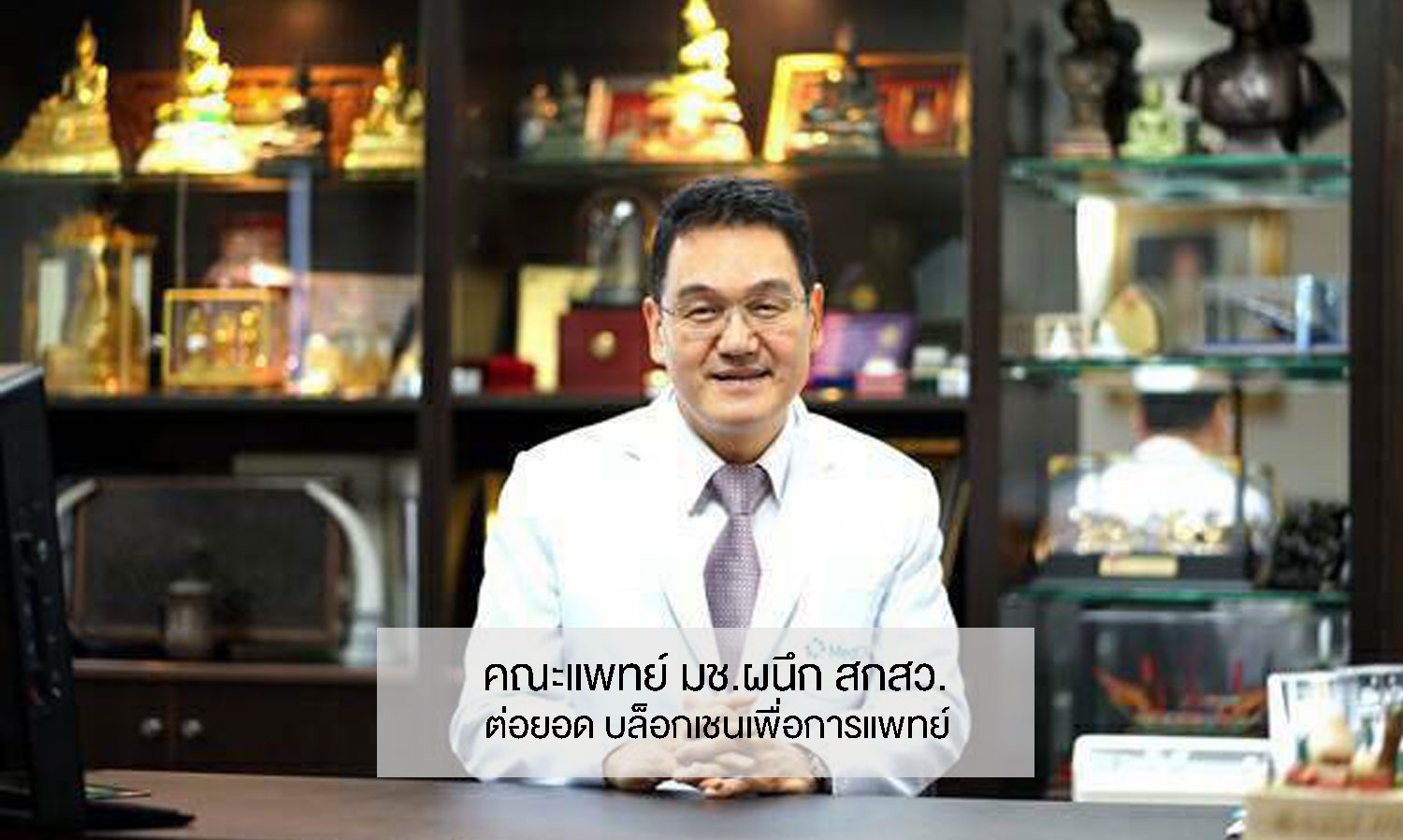
Chiang Mai University Medical Faculty Collaborates with NSTDA to Advance Blockchain in Healthcare
The Faculty of Medicine at Chiang Mai University (CMU) has partnered with the National Science and Technology Development Agency (NSTDA) to enhance healthcare services using blockchain technology. They are developing a prototype health and medical system, starting with Maharaj Nakorn Chiang Mai Hospital before expanding to network hospitals, benefiting patients and urging the government to support the implementation of this system across northern Thailand and nationwide as soon as possible.
Professor Banakij Lojanapivadh, Dean of the Faculty of Medicine at CMU, stated that blockchain is a new concept in the medical field, despite the existence of various systems previously used in healthcare. This new system aligns with the government's push for Thailand to advance into the Thailand 4.0 technology era. Importantly, Chiang Mai has been designated a Smart City, necessitating involvement with various information technology systems. Since blockchain technology is not yet widespread in the medical field, it presents a great opportunity to provide services that will enhance patient convenience, speed, and safety by ensuring that doctors receive accurate, precise, and timely information.
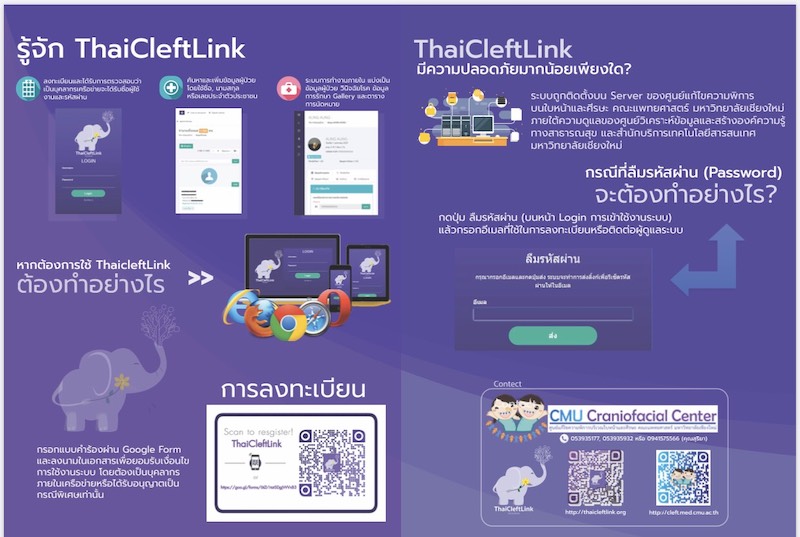
The prototype blockchain system is part of the Thai Cleft Link Program from the CMU Craniofacial Center at Maharaj Nakorn Chiang Mai Hospital and its network of hospitals. This project is part of the initiative to study tools and processes for developing smart cities, supported under the 4.0 regional and provincial development plan by the NSTDA. The objective is to study the tools and processes for developing smart cities.
Examples of blockchain applications in smart cities include the use of transparency functions in E-Voting systems, data verification functions, supply chain data connectivity, and third-party verification in smart contract systems that automate agreements among multiple parties based on predefined conditions.
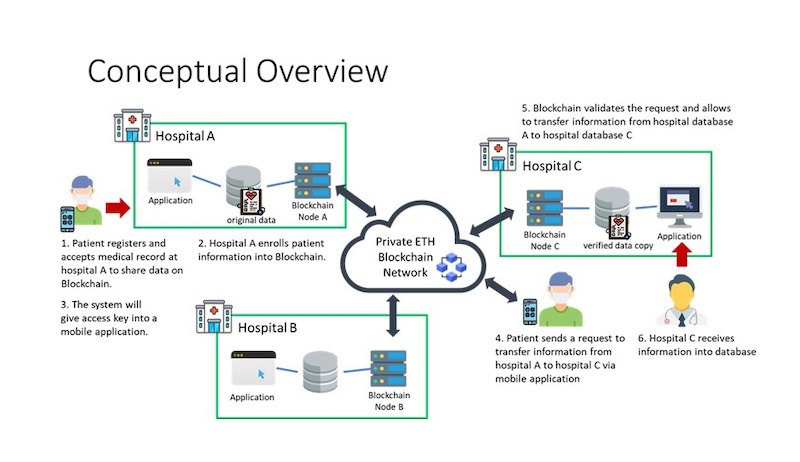
In healthcare, blockchain can facilitate data sharing among network hospitals and track patient health information, providing cross-platform data connectivity and ensuring data privacy security.
The benefits of implementing blockchain through the Thai Cleft Link Program at the CMU Craniofacial Center will lead to significant advancements in the medical field. For patients, it will reduce the time required to see a doctor and lower costs. Moving forward, the network can expand through blockchain, allowing for better data storage and management. However, as this is still in the experimental phase, there are some minor obstacles to overcome, and efforts are being made to enhance the system for broader implementation across network hospitals to ensure quality healthcare while safeguarding patient data.
Future project expansions will serve as a model for utilizing blockchain technology in medical systems. If successful, this could extend to other diseases, resulting in improved collaboration among network hospitals and related agencies, leading to better and faster patient care while reducing costs and enabling immediate tracking of treatment outcomes.
“We have begun establishing the system, and some results have already been realized. We also anticipate linking data from both domestic and international sources. In the long term, we believe this will promote treatment and research as a whole, given the importance of the data. We are ready to implement blockchain technology in hospitals and will promote and push for its application in other medical fields. Once fully prepared, we will expand to other hospitals in the network across northern Thailand and nationwide,” said Associate Professor Krit Kwan-ngern, Deputy Dean of the Faculty of Medicine at CMU.
He added that using blockchain in medicine can address issues related to shared data usage. A key aspect of development that will allow for network expansion to other hospitals is maintaining patient data confidentiality, especially with the strict personal data protection laws coming into effect in 2021. If blockchain can effectively preserve patient confidentiality, it will enhance the efficiency of this system, giving medical personnel greater confidence in its use. This initiative aims to resolve these limitations for the ultimate benefit of patients.
This forward-looking approach recognizes the significant potential of blockchain technology, which is well-suited for the medical field. The Thai Cleft Link Program at the CMU Craniofacial Center, which involves patients with cleft lips and palates, is currently testing the system separately from the hospital's central system. If testing proceeds without issues, the proposal will be presented to hospital management for rapid integration with the central hospital system, alongside expansion to network hospitals across eight provinces in northern Thailand.
Regarding concerns about how this will benefit patients and improve doctors' diagnoses, Associate Professor Krit stated that it will be immensely beneficial, with patients suffering from other diseases also reaping the rewards. Importantly, it will save time and costs in developing programs to link data between hospitals.
“If blockchain can unlock the limitations of data transfer between hospitals, it will revolutionize the development of technology for medical services across various hospitals in Thailand. Currently, there is no consent for data sharing between hospitals. If blockchain can facilitate this, it will address these issues. Notably, this system has already been successfully implemented in the financial sector,” he added.
Dr. Piyanuch Thupthamphong, project leader of the “Study of Tools and Processes for Developing Smart Cities” under the NSTDA, stated that this research aims to prototype blockchain technology for use at Maharaj Nakorn Chiang Mai Hospital, focusing on the storage and management of patient medical records. It is well-known that blockchain offers standardized data storage efficiency, but linking data between hospitals will yield benefits for both patients and doctors in terms of diagnosis and treatment effectiveness.
“Previously, patients or their relatives had to carry information to doctors for diagnosis, causing delays. Blockchain is a new practical option for collaboration in developing a prototype system using blockchain for healthcare between CMU and NSTDA. Once fully developed and operational, it will be expanded to the Cleft Lip and Palate Association of Thailand for connection with hospitals nationwide. In practice, if a request for approval is made through the system, patient data can be linked to the doctor immediately. If any patient does not consent, others will not be able to access that patient’s information. This system is already in use in several countries, but it has not yet been implemented in Thai hospitals, making it a significant step towards modernizing data management for greater efficiency,” she concluded.
Furthermore, a survey of target users in Thailand, including startups and IT executives with decision-making authority in large organizations within the National Innovation Agency and the Digital Economy Promotion Agency network, revealed that target users have basic knowledge of blockchain capabilities and are aware of its potential applications. However, they lack confidence in its practical implementation, and the high costs of system development pose a significant barrier. Therefore, to foster the development of blockchain technology usage in Thailand, awareness must be raised, and trials should be conducted to enhance understanding and lead to the rapid development of a functional blockchain system.